If you are thinking about buying in Centennial, it helps to know one thing right away: this city does not feel like one single, uniform market. Centennial is a large south-metro Denver suburb with about 108,853 residents, and your day-to-day experience can change a lot depending on the pocket you choose. When you understand how Centennial is laid out, what the housing stock looks like, and where costs can shift beyond the list price, you can shop with a lot more confidence. Let’s dive in.
Centennial feels like a collection of sub-areas
One of the biggest mistakes buyers make is treating Centennial like it has one clear center. In practice, it works better to think of it as a collection of distinct sub-areas with different housing patterns, amenities, and commuting advantages. That matters because the right fit for you may depend more on the specific pocket than on the city name alone.
The city’s long-range plan identifies several major areas, including Midtown Centennial along the I-25 corridor, SouthGlenn on the west side between South Broadway and South Colorado Boulevard, and Central Centennial between South Havana Street and South Jordan Road. You will also see mixed-use destinations like The District-Centennial near Dry Creek Station and The Streets at SouthGlenn at Arapahoe Road and University Boulevard. These places shape how different parts of Centennial feel today and how they may change over time.
Official HOA records also show just how varied the city is at the neighborhood level. Buyers often compare pockets like Willow Creek, Foxridge, Piney Creek, Homestead in the Willows, and Walnut Hills because each one can come with its own governance structure and maintenance expectations. If you are narrowing your search, neighborhood-level research usually tells you more than a broad citywide overview.
Centennial housing is mostly established suburban homes
If you want an established suburban setting, Centennial may line up well with your goals. The city’s housing data shows that about three out of four housing units are single-family detached homes, and 66% of units are three- or four-bedroom homes. That gives many buyers a wider range of traditional suburban layouts than they may find in denser parts of the metro area.
Centennial is also a strong ownership market. Current Census data shows an owner-occupied rate of 80.6%, while the city’s housing assessment reports that roughly 82% of households own their homes. That ownership pattern tends to reinforce the established, long-term residential feel many buyers are looking for.
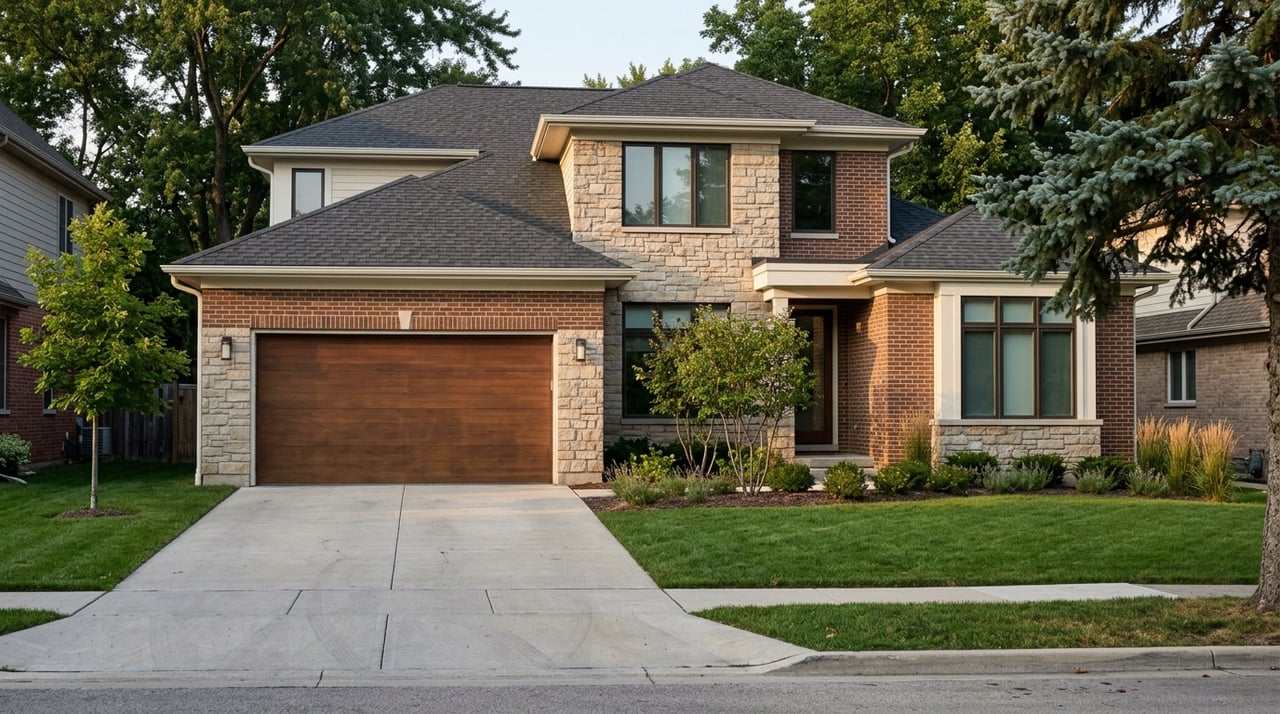
Another important point is age of housing stock. Centennial is not mostly brand-new construction. The city’s energy action plan found that 75.9% of single-family homes were built between 1970 and 1999, which means many buyers will be looking at homes with mature landscaping, older floor plans, and varying levels of updates.
That can be a positive or a challenge depending on what you want. You may find larger lots, established streets, and more traditional neighborhood layouts, but you may also want to budget for improvements, maintenance, or modernization. In Centennial, home condition and updating can matter just as much as square footage.
Price expectations should include more than list price
Centennial is an upper-income suburb by the numbers, and that shapes buyer expectations. Census data shows a median household income of $131,928 and a median owner-occupied home value of $658,100. Median gross rent is $2,148, which can also give you a rough sense of the area’s overall cost structure.
For buyers, though, monthly cost is about more than the purchase price. Centennial has many HOA-governed communities and several special districts, and those costs can vary significantly from one pocket to another. If you are comparing two homes with similar prices, the one with higher HOA dues or added district tax burden may have a meaningfully different monthly payment.
The city maintains HOA and special-district maps, and its records show multiple associations and entities tied to neighborhoods such as Willow Creek, Foxridge, and Piney Creek. Colorado’s Department of Local Affairs explains that property tax mill levies can include special-district levies, and one mill equals $1 per $1,000 of assessed value. In practical terms, buyers should review taxes, HOA obligations, and district structures carefully before making an offer.
School assignment takes address-level checking
For many buyers, school assignment is part of the home search from day one. Centennial is served by both Littleton Public Schools and Cherry Creek School District, and the city says these districts cover more than 50 area schools. That gives buyers more than one district context within the same city.
The key is not to assume a school assignment based on a neighborhood name or nearby campus. Cherry Creek School District states that assignment is based on the residence address, that its locator tool should be used to confirm the assigned school, and that attendance boundaries can change. That means address-level verification is essential before you move forward on a property.
Centennial’s neighborhood pattern can make that especially relevant. For example, Willow Creek Elementary is located in the Willow Creek community and serves as the home school for that subdivision. That is a useful example of how closely some Centennial neighborhoods and school assignments may be connected, but you still want to confirm each address directly.
Commuting depends on which pocket you choose
Centennial can work well for buyers who want suburban living with access to major employment corridors, but commute convenience is not the same everywhere in the city. Census data shows a mean travel time to work of 25.9 minutes, and local transportation options vary a lot by location. That makes commute planning another reason to compare sub-areas, not just homes.
The city highlights access to major roadways, interstate highways, E-470, RTD light rail, and RTD bus service. Dry Creek Station serves the E and R lines, and Arapahoe at Village Center serves the E and R lines plus several bus routes. Buyers who plan to use rail often focus on access to the southeast corridor stations rather than assuming easy service from every part of Centennial.
If you commute toward downtown Denver, the rail connection can be a helpful advantage from the right pocket. If your routine is more centered on the Denver Tech Center or I-25 corridor, proximity to freeway access and southeast rail stations may matter more than citywide averages. In Centennial, commute strategy is often very location-specific.
Redevelopment is changing some parts of Centennial
Another reason to look closely at sub-areas is that Centennial is not standing still. The city is actively shaping growth in several locations, especially around mixed-use and redevelopment areas. That can influence long-term convenience, traffic patterns, housing options, and neighborhood feel.
The Midtown Centennial plan is guiding redevelopment along I-25, and the city continues to shape both SouthGlenn and The District-Centennial as mixed-use growth areas. Centennial also adopted accessory dwelling unit regulations in 2024. Together, those changes suggest a city that is evolving in targeted pockets rather than growing through large waves of brand-new subdivisions.
For a long-term buyer, this matters because two homes in the same city may sit on very different paths of future change. One area may feel stable and established, while another may see more mixed-use growth and redevelopment over time. Neither is automatically better, but each creates a different ownership experience.
Who Centennial tends to fit best
Centennial often makes sense for buyers who want established detached homes, suburban amenities, and access to trails and major transportation routes. It can also appeal to buyers who want options across more than one school district within a single city. If your goal is a mature suburban setting with a range of neighborhood types, Centennial offers a lot to compare.
It may be less ideal if you want to avoid HOA or special-district complexity altogether. It may also be a less natural fit if you are hoping for a mostly new-construction market or a denser urban environment. In other words, Centennial can be an excellent match, but it rewards buyers who pay attention to the fine print.
How to shop Centennial more confidently
If you are serious about buying in Centennial, focus your search in layers. Start with your budget and commute needs, then compare sub-areas, then review neighborhood-specific details like HOA structure, tax burden, and housing age. That approach usually gives you a clearer picture than filtering by city name alone.
It also helps to compare homes through the lens of total ownership experience, not just finishes or list price. Ask how old the home is, what monthly obligations apply, how the neighborhood is governed, how the commute works from that address, and how school assignment is verified. Those details can shape your satisfaction long after closing day.
A city this varied can offer great opportunities, but only if you evaluate it with enough precision. Centennial rewards buyers who slow down, compare carefully, and understand the differences between one pocket and the next.
If you want a clear, practical read on Centennial neighborhoods and how they fit your goals, Thaddeus Howells can help you compare options and move forward with confidence.
FAQs
What should home buyers know about Centennial neighborhoods?
- Centennial is best understood as a collection of distinct sub-areas and neighborhoods, including areas like Midtown Centennial, SouthGlenn, Central Centennial, Willow Creek, Foxridge, Piney Creek, Homestead in the Willows, and Walnut Hills, each with different housing patterns, governance structures, and maintenance expectations.
What is the housing stock like for buyers in Centennial, Colorado?
- Centennial is dominated by established suburban housing, with about three out of four units being single-family detached homes, many of them built between 1970 and 1999, so buyers should expect an older housing stock with a mix of updates and maintenance needs.
What extra costs should buyers check in Centennial?
- Buyers should look beyond the mortgage and review HOA dues, special-district structures, and property-tax mill levies, since these can vary by neighborhood and materially affect monthly carrying costs.
What should buyers know about school assignments in Centennial?
- Centennial is served by Littleton Public Schools and Cherry Creek School District, but school assignment depends on the property address, so buyers should confirm the assigned school directly for each home they consider.
Is Centennial a good location for commuting?
- Centennial offers access to major roads, I-25, E-470, RTD light rail, and bus service, but commute convenience depends heavily on the specific pocket, especially if you want access to southeast corridor rail stations like Dry Creek or Arapahoe at Village Center.
Is Centennial mostly new construction or established neighborhoods?
- Centennial is primarily an established suburban market rather than a city defined by new subdivisions, although some pockets are seeing redevelopment and mixed-use growth over time.